



L'Œuvre d'Orient: History, Origins, and Mission of a French Catholic Institution Serving Christians in the East
L'Œuvre d'Orient is a French Catholic institution founded in 1856, now recognized as one of the leading organizations supporting Christians in the East. For more than 170 years, it has demonstrated remarkable continuity in its mission despite significant geopolitical upheavals: born out of militant Catholicism and post-Crimean diplomacy, it has gradually evolved into a humanitarian and development organization. In this article, we trace the history of the Œuvre d’Orient, its founding vision, and the key figures who have shaped its evolution, all while remaining faithful to its original mission: to serve as a bridge between Catholic France and the Eastern Churches.
The Origins of the Œuvre d’Orient: A Unique Diplomatic and Religious Context (1856)
The history of the Œuvre d’Orient begins at a pivotal moment in international politics, in the mid-19th century. In 1856, the Treaty of Paris, which ended the Crimean War, officially recognized France’s role as protector of Christians in the Ottoman Empire. The idea of coming to the aid of Christians in the Levant, however, predates this diplomatic event by a long time.
This status, rooted in a long tradition of “protecting the Holy Places,” gave France a special legitimacy to intervene on behalf of Christian minorities scattered throughout the then-declining Ottoman Empire—what European chancelleries at the time referred to as the “Eastern Question .” It was within this specific context that the idea of a structured organization capable of supporting Eastern Christian communities—particularly in Lebanon, Syria, and Palestine—took shape.
This initiative was, in fact, part of an older tradition: ten years earlier, in 1846, the Mount Carmel Association for the Protection of Eastern Christians had been founded. Its members included Victor Hugo and Alexandre Dumas, as well as some of the future founders of the Œuvre d’Orient.
The Official Founding on April 4, 1856
On April 4, 1856, the Œuvre des Écoles d’Orient—the original name of the Œuvre d’Orient—was founded by intellectuals and politicians from across the political spectrum, including:
- the mathematician Augustin Cauchy, a professor at the Sorbonne;
- the Hellenist Charles Lenormant, a professor at the Collège de France;
- Alfred de Falloux, Minister of Public Instruction and Religious Affairs;
- Charles de Montalembert and Henri Wallon, members of the Académie Française and Catholics committed to the social doctrine of the Church;
- Father de Ravignan, a Jesuit priest, spiritual director, writer, and renowned preacher.
This group of founders embodied the most active wing of liberal and social Catholicism during the July Monarchy and the Second Empire. They were also at the heart of the editorial life of the Catholic newspaper *Le Correspondant*, where they defended their political and religious convictions, particularly in support of freedom of Catholic education.
Charles Martial Lavigerie, First Director of the Œuvre
From the very beginning, the association established a professional leadership structure. In 1857, Father Charles Martial Lavigerie, a professor of theology at the Sorbonne, was appointed the first director of the Œuvre des Écoles d’Orient, on the recommendation of Bishop Félix Dupanloup, a member of the French Academy and a staunch defender of Catholic education.
A key architect of the Œuvre’s founding, Lavigerie would later become bishop of Nancy, then archbishop of Algiers, a cardinal, and founder of the White Fathers—a career path that illustrates how the Œuvre also served as a springboard for prominent ecclesiastical figures. It was Lavigerie himself who, traveling throughout France, secured the appointment by bishops of delegates in each diocese to promote the Œuvre, preach on its behalf, and collect donations. His successor, Pierre Soubiranne (1861–1872), a former classmate of Lavigerie at the Saint-Sulpice Seminary, continued his work.
A Founding Vision: The School as a Vehicle for Civilization and Faith
The primary mission of the Œuvre d’Orient is explicitly educational: to educate Christians in Lebanon in order to empower them, provide them with a trade, and enable them to support themselves without depending on outside aid. Education was thus seen as an essential lever for the future of local societies.
For the founders, the transmission of knowledge in the Catholic spirit was the best means of maintaining the presence and vitality of Eastern Christians in the face of Ottoman pressures and the temptations of conversion or emigration. This vision inextricably blends the Catholic faith, the French civilizing mission, and inter-ecclesial solidarity.
Papal Recognition as Early as 1858
As early as 1858, the Œuvre des Écoles d’Orient was recognized as a Church organization by Pope Pius IX, which conferred canonical legitimacy upon it and strengthened its institutional roots in Roman Catholicism. The Œuvre focused primarily on:
- Latin congregations in the East (the Latin Patriarchate of Jerusalem, the Jesuits, the Lazarists, the Franciscans, the Dominicans, the Daughters of Charity, the Sisters of Saint Joseph of the Apparition, and the Sisters of the Sacred Hearts);
- the Eastern Churches affiliated with Rome (Maronites, Melkites, Chaldeans, Syriacs, Armenian Catholics).
School as a Means of Survival in the Wake of the 1860 Massacres
As early as 1860, following the massacres in the Chouf region of Lebanon and in Damascus—exacerbated by Franco-British rivalry — the Society helped open orphanages coupled with schools, enabling orphans whose fathers had been murdered to support their mothers by learning a trade.
The Society does not work directly with the local populations, but through local religious congregations and clergy. Missionary chaplains from various religious orders (Jesuits, Lazarists, Franciscans, Capuchins, Dominicans) serve as a link to the Eastern Christian communities. This led to the establishment of:
- a discreet pastoral ministry;
- schools, first for boys in the late 17th century, then for girls beginning in the 1860s;
- clinics and hospitals in the 19th century.
Beginning in 1860, the organization’s areas of operation expanded to Mount Lebanon, Syria, the Holy Land, and then to Egypt, Mesopotamia, Persia, and the Ottoman Balkan provinces (Bulgaria, Serbia, Macedonia). On the cultural front, from its earliest years, the Organization subsidized the publication of the 1863 French-Arabic dictionary in Beirut by the Jesuits, as well as the printing press of the Dominican Fathers in Mosul in 1860 —demonstrating a vision that went beyond mere educational support to embrace the dissemination of the French language and culture in the East.
From Education to Humanitarian Aid: The Early Decades of the Œuvre d’Orient (1860–1914)
1860: The Humanitarian Turning Point
The first major turning point for the Œuvre d’Orient came as early as 1860. Following the massacres of Christians by the Druze in Mount Lebanon and Damascus, its activities expanded to include humanitarian aid. This event sparked a strong mobilization of Catholic public opinion and the French government: Lavigerie accompanied the French expeditionary force to deliver the Œuvre’s aid to the victims and distribute both the association’s own subsidies and funds allocated by the government. Napoleon III took a personal interest, giving the association unprecedented national visibility.
Bishop Félix Charmetant: A Pivotal Period (1883–1921)
The leadership of White Father Félix Charmetant, beginning in 1883, marked a decisive phase in the history of the Œuvre d’Orient. A former missionary with the White Fathers in North Africa and Zanzibar, Bishop Charmetant brought to the Œuvre his hands-on experience and intimate knowledge of missionary realities. Appointed by Cardinal Lavigerie, he significantly expanded the organization’s scope of action, far beyond mere support for schools.
A man of action, he made several trips to the East—notably in 1887 and during the Eucharistic Congress in Jerusalem in 1893—to personally assess the needs of Christian communities and adapt the Œuvre’s work to local realities. He also helped found the Alliance Française and the newspaper *Terre Sainte*, highlighting the close ties between the promotion of the French language and Catholic solidarity abroad.
Under his leadership, the Œuvre developed a particular interest in the Armenian cause, anticipating the tragedies to come by warning of the imminence of new massacres in Anatolia, which indeed took place between 1894 and 1896. His literary work attests to the scope of his struggle, notably including:
- *The Armenian Martyrology* (1896);
- *Armenia in Agony and Christian Europe* (1897).
He also repeatedly appealed to French heads of state and members of parliament to mobilize the international community, relentlessly denouncing the atrocities being committed and questioning Christian Europe about its silence.
Elevated to the rank of prelate in 1898 by Pope Leo XIII, Bishop Charmetant remained director of the Œuvre d’Orient until his death in 1921—a record for longevity. His legacy extends beyond mere charity: he forged a doctrine of active solidarity between Christians in the West and the East, based on the principle that indifference in the face of persecution constitutes a collective moral failure.
The Œuvre d’Orient in the 20th Century: Genocide, World Wars, and Decolonization
The Œuvre d’Orient entered the 20th century weakened by the anticlerical climate of Republican France, but its networks on the ground made it irreplaceable. Although fiercely anticlerical domestically, Republican France spared no support for French Catholic missions in the East.
The Armenian Genocide and World War I
World War I and, above all, the Armenian Genocide of 1915 constituted a decisive trial: the Christian communities in Anatolia that the Œuvre had supported for decades were decimated or dispersed. The Œuvre then served as a lifeline for Armenian and Assyrian-Chaldean survivors and refugees.
The collapse of the Ottoman Empire at the end of the war, followed by the establishment of the French (Syria, Lebanon) and British (Palestine, Iraq) mandates, redrew the map of the Christian East. In 1931, the institution abandoned its original name, “Œuvre des Écoles d’Orient,” to adopt “Œuvre d’Orient ”—a symbolic change reflecting a broader scope of action, extending far beyond support for schools alone.
From World War II to Independence
World War II, the expulsion of Palestinians from their homeland by the Zionists, and then the waves of independence from the 1940s to the 1960s (Syria, Lebanon, Iraq, Egypt) once again transformed the context. The Eastern Churches, now a minority in sovereign Arab states that were at times dominated by nationalism, needed external support more than ever. The Organization worked to provide this by maintaining its networks for funding dioceses, religious congregations, and schools.
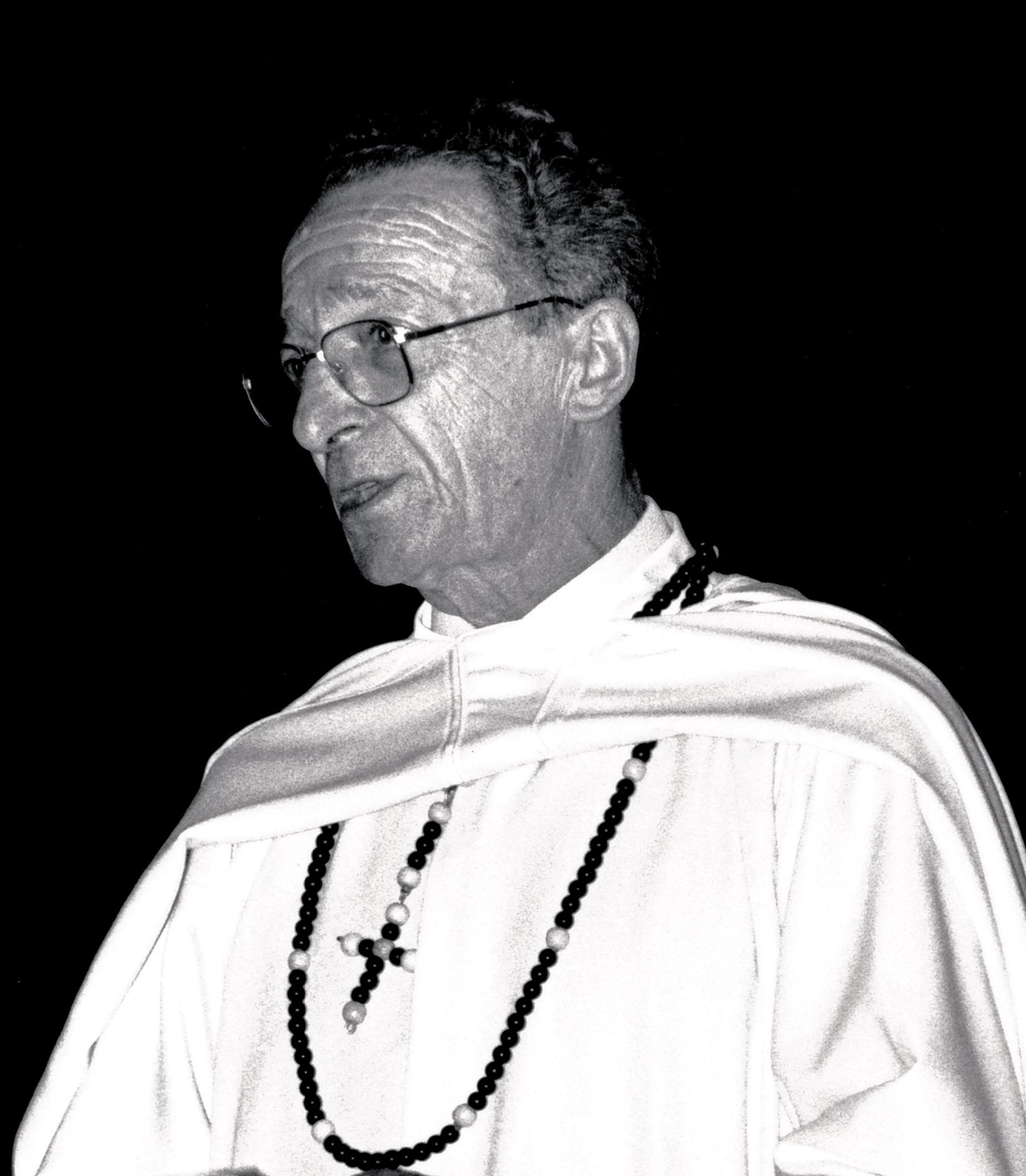
The Lebanese Civil War and Bishop Georges Vernade (1978–1987)
The 1970s marked the beginning of a cycle of serious crises that continues to this day. The Lebanese War, in particular, saw the Work become deeply involved alongside the Lebanese people. Its director general, Bishop Georges Vernade (1978–1987), traveled throughout the parishes of France to raise awareness about Eastern Christians. For nine years, he traveled to these regions—from Cyprus to Ethiopia, from Egypt to India, from Syria to Djibouti, from Turkey to the Holy Land and Greece—to witness firsthand the lives of these often-forgotten Christians. Among his achievements was the development of school sponsorship programs for children in Lebanon.
Three Leading Figures of the Œuvre d’Orient in the 20th and 21st Centuries
The contemporary history of the Œuvre d’Orient is embodied by exceptional individuals who have successfully adapted the institution to the upheavals of the modern world while preserving its fundamental mission. Three figures deserve special recognition: Bishop Georges Marolleau, Bishop Philippe Brizard, and Bishop Pascal Gollnisch.
Bishop Georges Marolleau (1901–1982): Twenty Years in the Service of the Christian East
Bishop Georges Marolleau single-handedly embodies the Œuvre d’Orient’s transition to modernity, all while maintaining an unbreakable bond with its roots. Born in Blois on June 9, 1901, and ordained a priest in Angers on June 29, 1927, his life story reveals a man shaped by the trials of the 20th century.
Appointed prefect of the prestigious Collège Stanislas in 1927 by Father Martin, he held key positions there until World War II. It was during this dark period that his true mettle was revealed: under the Occupation, he took on the delicate role of prefect of the preparatory school and organized the school’s relocation to the Château de Rochefort-en-Yvelines.
His involvement in the underground Resistance, driven solely by patriotic and humanitarian motives, made him a target of the Gestapo. Forced to go underground in 1943, he carried the burden of regret until the end of his life: that he had been unable to prevent the taking of students from the middle school as hostages and their execution—they were shot by the Germans in Marcilly on June 10, 1944. This experience of resistance in the face of barbarism and of sacrifice for human dignity would shape his sensitivity to the tragedies faced by Eastern Christians.
After the Liberation, Bishop Lagier called on him to join the leadership of the Œuvre d’Orient, to which he would devote the rest of his life. The death of Bishop Lagier in 1958 propelled him to the helm of the institution as Executive Director, a position he would hold for twenty decisive years (1958–1978): decolonization of the Middle East, the rise of Arab nationalism, the Six-Day War (1967), and the start of the Lebanese Civil War (1975).
His service earned him extraordinary recognition: Apostolic Protonotary, Choreveche of the Maronite Church, Honorary Canon of Warsaw and Włocławek, Honorary Canon of Smyrna, Officer of the Legion of Honor, Commander of the Order of the Holy Sepulcher, Commander with Plaque of the Order of the Star of Jordan, and Officer of the Order of the Cedar of Lebanon.
He died in Paris on April 1, 1982, and was buried in Trémentines, in the Diocese of Angers, on April 5. His legacy lies in his ability to maintain the Œuvre d’Orient as a key player in solidarity with the Christian East at a time when geopolitical landmarks were becoming blurred.
Bishop Philippe Brizard (2001–2010): Defender of Lebanon
Bishop Philippe Brizard took the helm of the Œuvre d’Orient at the turn of the millennium, amid a context marked by the September 11, 2001, attacks and their disastrous consequences for the Middle East. His tenure (2001–2010) coincided with a period of extreme tension: U.S. invasions of Afghanistan and then Iraq, the collapse of the Iraqi Christian community, and Israel’s war against Lebanon in 2006.
It was precisely during the Israeli aggression of 2006 that Bishop Brizard revealed his true stature. Rejecting cautious neutrality, he took a strong stand in defense of Lebanon, denouncing the massive destruction and the suffering of the civilian population. This courageous stance broke with a certain tradition of diplomatic discretion and established the Œuvre as a moral voice of significance in the French public debate.
Under his leadership, the Work intensified its outreach efforts in the French public sphere, increasing the number of conferences, media appearances, and mobilization campaigns—thus laying the groundwork for a stronger presence of the cause of Eastern Christians in the French collective consciousness.
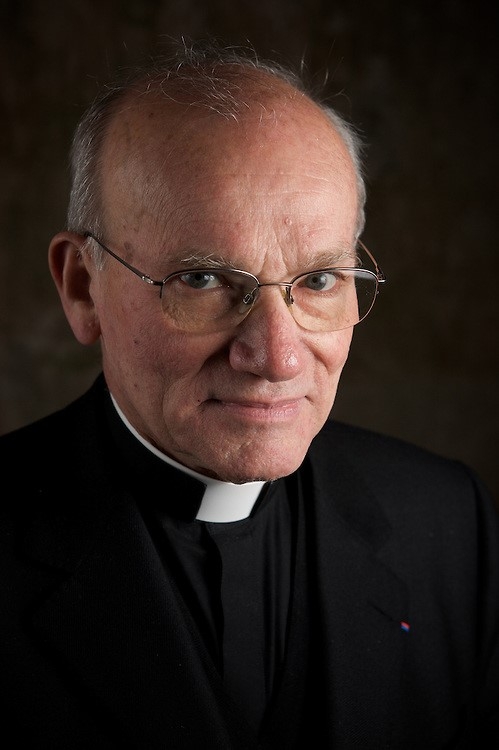
Bishop Pascal Gollnisch: Facing the Storms of the 21st Century
Succeeding Bishop Brizard, Bishop Pascal Gollnisch inherited an even more dire situation. The Arab Spring of 2011, far from bringing the democracy that had been hoped for, plunged the region into chaos. The Syrian civil war tore apart one of the oldest centers of Eastern Christianity, while the emergence of ISIS in 2014 threatened to wipe out the Christian and Yazidi communities of the Nineveh Plains in Iraq.
Bishop Gollnisch is working with remarkable energy to ensure that the tragedy of Eastern Christians ceases to be a footnote in international news. He has undertaken numerous missions in the field—to Syria, Iraq, Egypt—to bear witness to the reality faced by these communities and to bring their voices to political decision-makers and the public. Under his leadership, the Œuvre d’Orient has become a major player in the French public debate on the Middle East.
To the organization’s three historic pillars of action—education, health, and pastoral care—a fourth imperative has now been added: the defense of endangered Christian heritage. Faced with the systematic destruction carried out by ISIS (monasteries, churches, ancient manuscripts), Bishop Gollnisch mobilizes funds and expertise to safeguard this treasure of humanity, aware that by destroying the stones, the fanatics seek to annihilate the memory and roots of Christians.