


Education
More than 400 schools receive support from Œuvre d’Orient for children’s education, the reconstruction of school buildings, and educators’ salaries.
More than 400 schools receive support from Œuvre d’Orient for children’s education, the reconstruction of school buildings, and educators’ salaries.
L’Œuvre d’Orient funds the care of 3 million patients in clinics, hospitals, and institutions for people with disabilities or the elderly.
By supporting the formation of men and women religious, the Œuvre d’Orient enables priests and religious orders to carry out their daily missions.
L’Œuvre d’Orient works to preserve the heritage of Eastern Christianity by protecting it in its home countries and promoting awareness of it in France.
How to Download the Slideshow or Quiz 1 – Open the Canvaslink. 2 – Click the Share button (top right).3 – Click the word "Download" in the list (bottom left).4 – Click the small arrow under "File Type." 5 – Select the option MP4 Videos for Quizzes and Animated Slideshows (Once it starts playing, you […]
Read moreLebanon is in the throes of a political, economic, and social crisis of unprecedented severity: massive bombings are ravaging the country in mid-March 2026, with more than 1 million people displaced, 992 dead—including 100 children—and 2,200 wounded. Residents of Christian villages in southern Lebanon are refusing to leave, fearing they will not be able to […]
Read moreList of available documents: https://www.calameo.com/oeuvre-orient/read/0060888700a671f2f05cd
Read more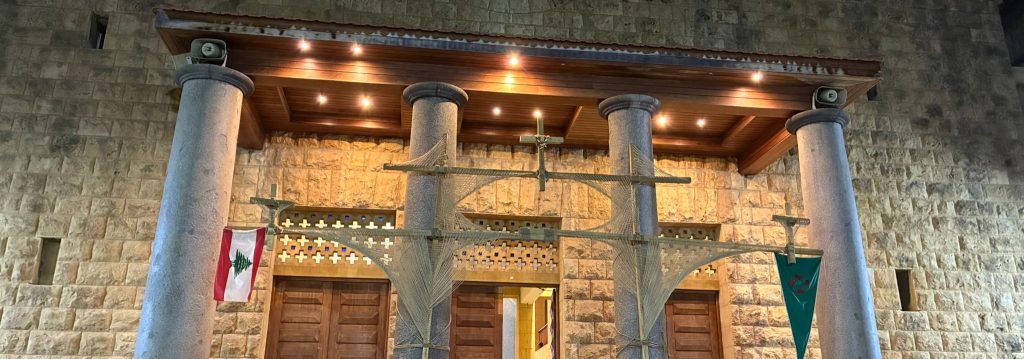
The Congregation of the Mission, known as the Lazarists (named after their first residence in Paris, the Priory of Saint-Lazare), was founded by Saint Vincent de Paul in 1625 for the evangelization of the poor. This work of human and Christian development was initially carried out through popular missions in rural areas and the organization […]
Read more
The Maronite Church owes its name to Saint Maroun (d. 410), a Syriac ascetic from the Orontes Valley. The original community distinguished itself at the Council of Chalcedon (451) by remaining the only Syriacs faithful to its doctrine. The Maronites consider themselves to have always been faithful to Rome. Having taken refuge in the Qadisha […]
Read moreNo news items match this filter.