The preservation of Eastern Christian heritage has always been a priority for L’Œuvre d’Orient, but it was only recently—in light of the tragedies unfolding in its mission countries—that the organization decided to step up its efforts, thereby responding to a request from local communities.
Beginning in 2012, under the leadership of Bishop Pascal Gollnisch, L’Œuvre d’Orient has devoted particular attention to the issue of the heritage of Eastern Christians, adding this topic to its educational, social, and pastoral priorities. The abandonment of churches and monasteries in eastern Turkey, the destruction of works of art and monuments by Islamists in Iraq, Syria, and Egypt, the displacement of populations, as well as ignorance—both in the Middle East and in Europe—regarding the civilization of Eastern Christianity, justify this decision.
A very broad definition of what is known as “heritage” emerged from the outset: monuments, liturgical objects, icons, manuscripts, and archives, as well as liturgies, rites, languages, costumes, and music. The next step was to identify those who are familiar with these treasures and those who know how to protect them, whether they are members of Christian communities, work for government agencies responsible for heritage preservation, or are affiliated with universities or research centers.
The very idea of an Eastern Christian heritage has emerged in stages. It is true that it is by no means obvious: the connection between the art of Ukraine, Ethiopia, Kerala, and Lebanon is not immediately apparent. One must grasp a multifaceted reality whose unity stems from the common matrix of Byzantium—its art and thought—which were transformed through contact with the cultures it encountered: the Semitic world of Mesopotamia, the Caucasus, Persia, India, Ethiopia, and the Slavic world. By partnering with the Arab World Institute to design the 2017 exhibition *Christians of the East*, and by contributing to the publication of *The Art of the Christians of the East*[1] by Raphaëlle Ziadé in 2022 and subsequently *The Civilization of the Christians of the East*[2], L’Œuvre d’Orient contributed to this recognition, which was formalized by the decree of October 3, 2022, establishing the Department of Byzantine and Eastern Christian Arts at the Louvre—a recommendation made in our 2018 report to the President of the Republic[3].
Some, however, legitimately wondered why the protection and understanding of cultural heritage had become a priority for L’Œuvre d’Orient at a time when so many people were facing physical threats or enduring upheaval in their economic and social lives. To answer this, several arguments gradually emerged: first, the Eastern Christian communities themselves were asking for help to protect this heritage. Second, these vestiges of the past were of fundamental importance in that they attested to the two-thousand-year presence of Eastern Christians on their lands and their participation in building the societies that live there. Finally, the study and dissemination of these artistic and intellectual treasures highlight to the entire world the contribution of Eastern Christianity to humanity’s heritage and help to raise awareness of and foster a better understanding of their uniqueness and universality.
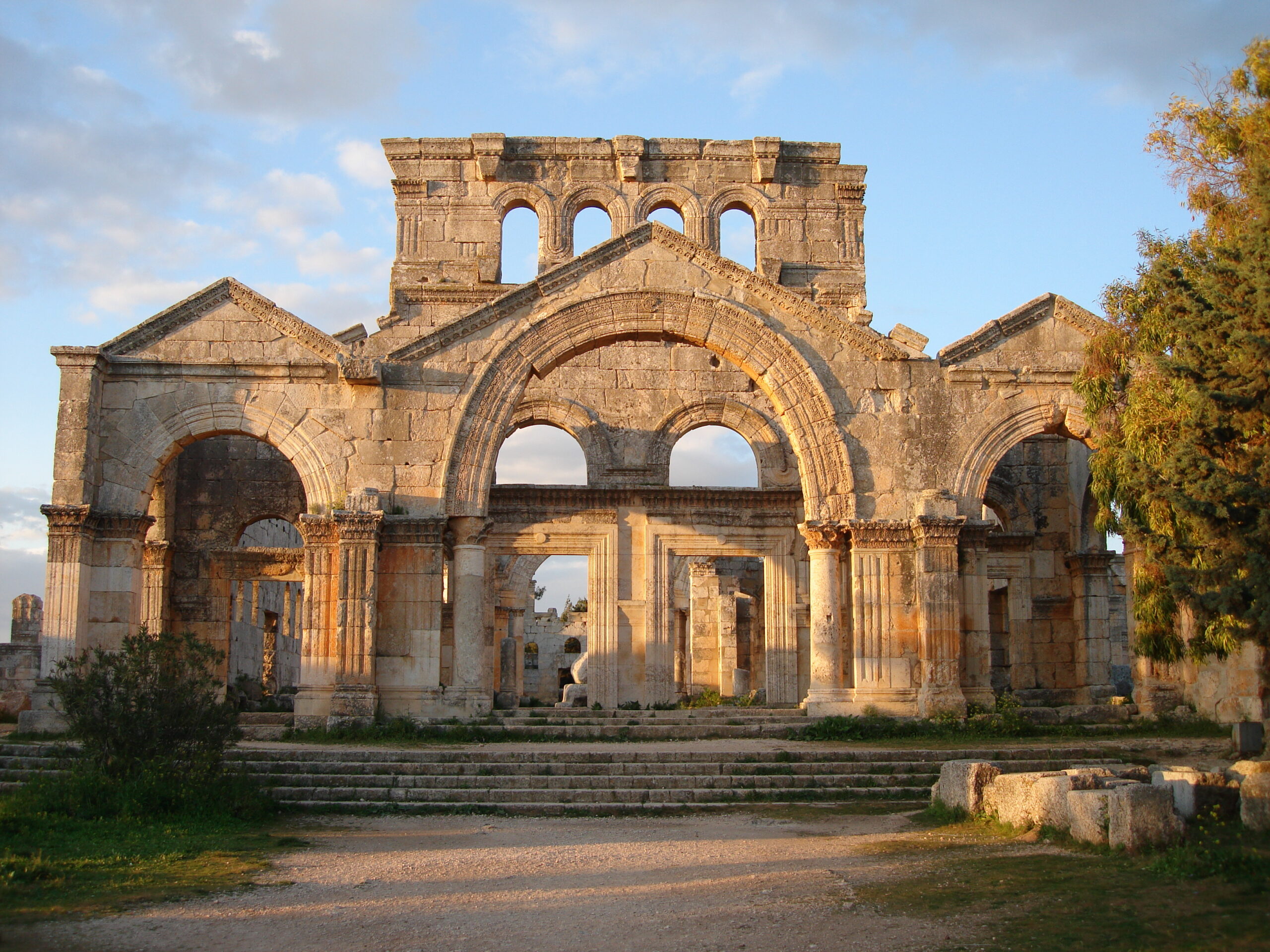
On this basis, two objectives emerged: to deepen understanding of the heritage of Eastern Christians and to take action to protect it. To achieve the first objective, numerous conferences were organized, exhibitions were held throughout France, and L’Œuvre d’Orient raised public and government awareness of the threats facing various regions, particularly in recent years in Armenia, Gaza, and Ukraine. Its literary prize has encouraged research, and the courses offered by the Institut des Chrétiens d’Orient have complemented these efforts to disseminate knowledge. To achieve the second objective, a manuscript restoration center was established in Lebanon, and several churches and monasteries have been restored in Lebanon, Syria, and Iraq. Most recently, two churches in Mosul, ravaged by fighting, were restored to life and inaugurated on October 15 in the presence of civil and religious authorities. In Syria, a project is underway to restore the Monastery of Saint Symeon, a masterpiece of Christian art in the country. Everywhere, icons and manuscripts are being protected. The inventory of intangible cultural heritage is progressing, which is essential for its preservation.
This initiative has led L’Œuvre d’Orient to collaborate with numerous partners: museums, heritage architects, the National Institute of Heritage, embassies, other organizations interested in this issue—such as Mesopotamia and La Guilde—international organizations such as ALIPH, and academic institutions such as the National Institute of Oriental Languages. It has also strengthened its internal expertise. In just a few years, it has become a respected player in the field of cultural heritage in the countries where it operates.
Charles Personnaz
[1] ZIADE, R., The Art of Eastern Christians, Citadelles et Mazenod, Paris 2022
[2] PERSONNAZ, C., *The Civilization of the Eastern Christians*, Albin Michel, Paris 2023
[3] Report commissioned by the President of the Republic from Charles Personnaz on support for the cultural heritage of Middle Eastern minorities and the network of French-speaking Christian schools.
Read the full issue No. 821 here.