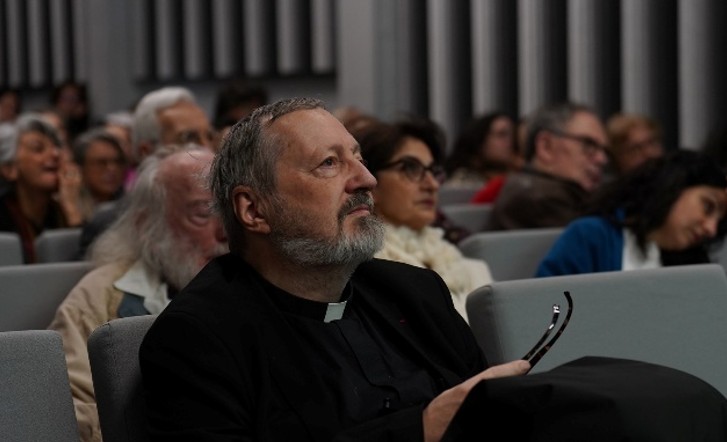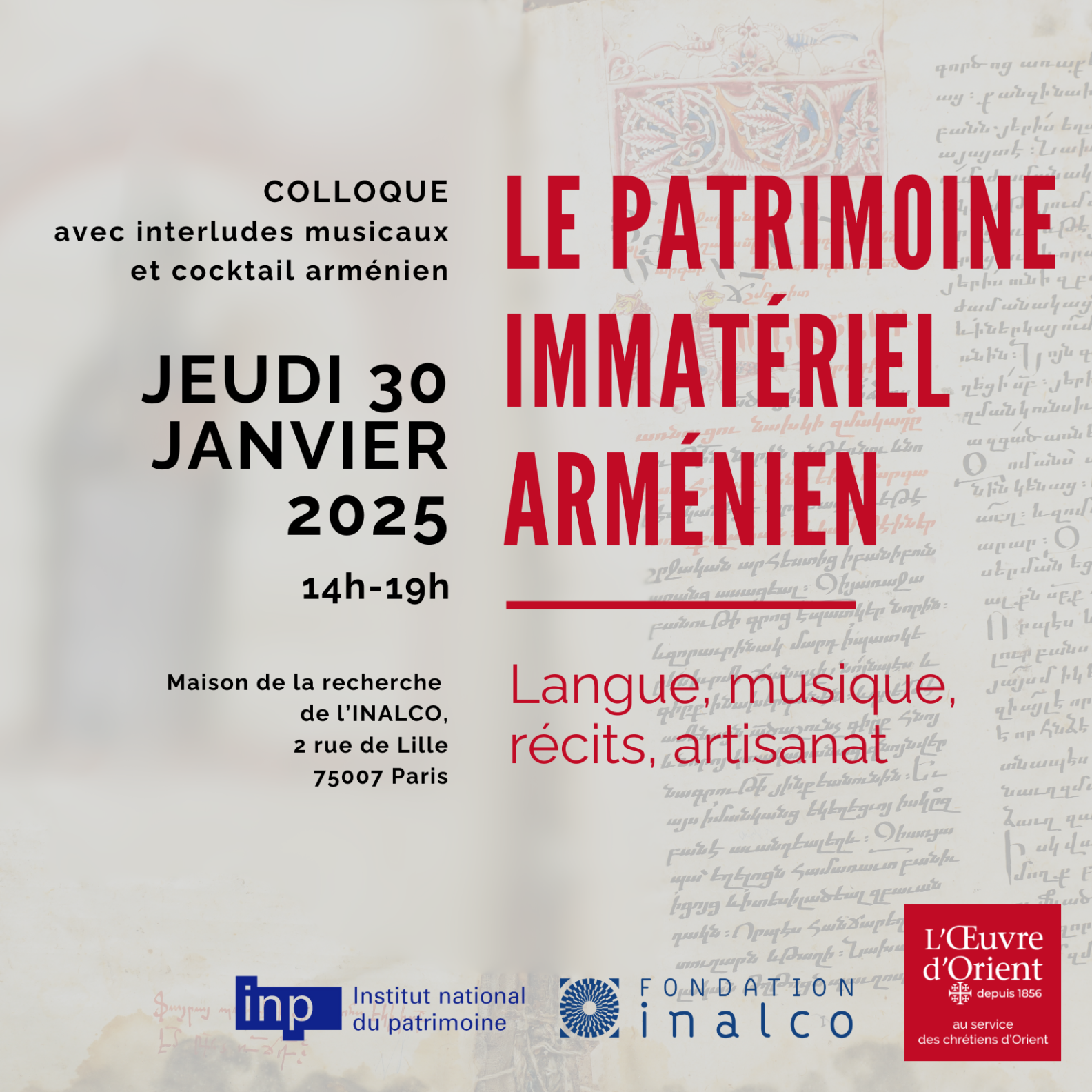
This symposium was held at INALCO’s Maison de la Recherche in response to L’Œuvre d’Orient’s accreditation under the 2003 Convention for the Safeguarding of the Intangible Cultural Heritage. A diverse group of speakers gathered—including ambassadors, representatives from the Ministry of Culture of the Republic of Armenia, researchers, artists, and practitioners in the field—to address questions regarding the transmission of Armenian heritage: language and dialects, traditional skills, music, storytelling, liturgy, and spirituality.
More than 200 people took part in the discussions, which were accompanied by music played on the duduk, a traditional instrument inscribed on the Representative List of the Intangible Cultural Heritage of Humanity in 2008.
Armenian Intangible Cultural Heritage?
Given that Armenians have endured numerous displacements, invasions, and acts of destruction over the millennia, what is the cultural fabric of the Armenian people?
Michel Petrossian, a composer, historian, and philologist, believes that Armenians have preserved their identity while adapting, thereby demonstrating a cultural flexibility that has helped preserve their heritage over time.
The history of Armenian art bears traces of the influences of various civilizations, such as the Abbasid Caliphate and the Seljuk and Mongol empires. These interactions have greatly influenced the development of Armenian art, architecture, cuisine, customs, music, and even the Armenians’ worldview.
Furthermore, the Armenians were able to maintain territorial control, a significant population base, and the ability to integrate into global trade networks, thereby bringing their cultural identity to the regions where they settled.
Armenian identity is deeply rooted in language and religion. The Armenian alphabet was created by Mesrop Mashtots in 405. This alphabet is unique to the Armenian language: very few peoples in the world have a national alphabet like Armenia’s. Mesrop Mashtots wrote the Bible in the Armenian alphabet, demonstrating the connection between the Christian faith and Armenian culture.
Armenians often point out that in 301, King Tiridates IV converted to Christianity, thereby making Armenia the first Christian country.
Finally, the Armenians preserve the techniques and traditions of their ancestors, demonstrating a rare capacity for cultural continuity.
What do Armenian institutions tell us?
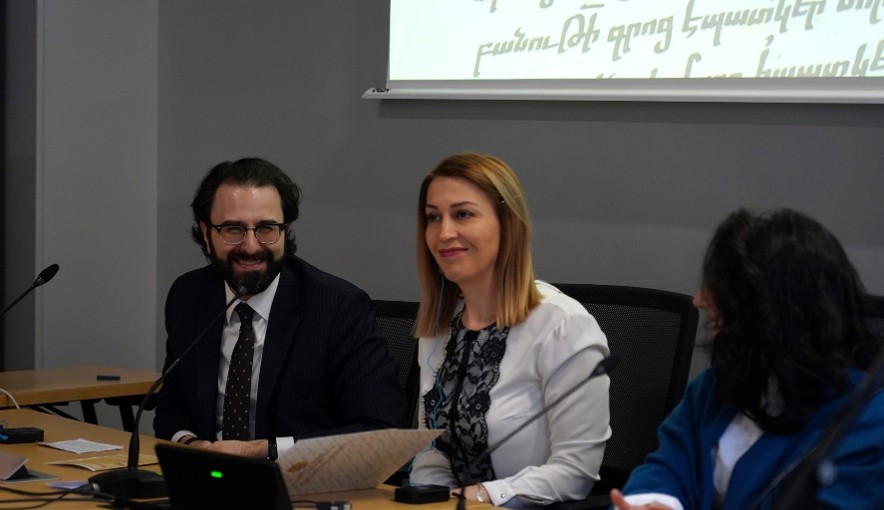
On the right: Ms. Astghik Marabyan and Ambassador Aram Hakobian
Mr. Aram Hakobian, Permanent Delegate of the Republic of Armenia to UNESCO, notes that, in addition to national inscriptions on UNESCO’s lists, Armenia supports cultural expressions shared by different countries. In this regard, the Pilgrimage of Saint Thaddeus in northwestern Iran was inscribed jointly by Armenia and Iran in 2020. These joint nominations highlight commonalities rather than differences—a precious asset in this era of instability and geopolitical tensions.
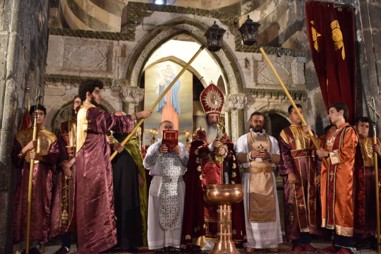
Above: The annual pilgrimage of Saint Thaddeus in Iran
Ms. Astghik Marabyan, head of the Cultural Heritage Department at the Ministry of Education, Science, Culture, and Sports of Armenia, outlines the key areas of the Republic of Armenia’s policy in this field:
- Inventory in the form of a national list of intangible cultural heritage (ICH) and digital documentation
- Engaging Local Communities and Building Capacity
- Promotion and International Recognition
The Contribution of INALCO’s Research: The Endangered Dialects of Artsakh
The scientific approach is essential to the preservation of cultural heritage, including languages and knowledge. As INALCO’s Vice President for Research, Ms. Rima Sleiman, explains, the university launched the program for the documentation and preservation of Armenian heritage in 2023.
Ms. Anna Leyloyan-Yekmalyan, an art historian and lecturer at INALCO, has been primarily focused on preserving Artsakh’s cultural heritage since 2020. More than 4,000 monuments, churches, shrines, and khachkars (stone crosses) are directly threatened with ruin or misappropriation. The Hishatakaran project aims to scientifically document this heritage.
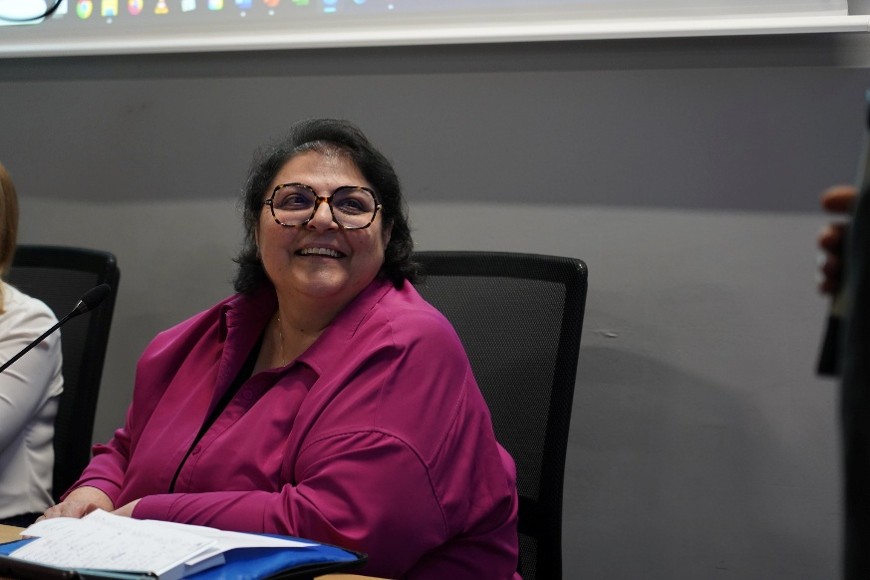
Dialects, folktales, and traditions will be diluted or lost as a result of the successive displacements in 2020 and then 2023. This cultural heritage can, however, be preserved thanks to organizations such as DIZAK ART, which brings together refugees from Artsakh through music, theater, and local dialects.
Ms. Victoria Khurshudyan, a lecturer at INALCO, explains that the dialects of Artsakh are what are known as “displaced” languages—that is, languages affected by the displacement of one population, leading to their extinction in favor of another. The project to digitize Armenia’s linguistic heritage aims to document and analyze these endangered dialects.
A Living Heritage Through Creativity and Community Organizations
Nairi Khachaturian, an art historian and curator, bridges the gap between cultural heritage and artistic creation. The curator acts as a mediator between ancient heritage and contemporary art. When the Dadivank Monastery in Karabakh was slated for destruction by Azerbaijan, four artists traveled there in 2020 to take impressions of the site and subsequently exhibit them at Yerevan’s leading contemporary art museum. In this way, the imprint is transformed from an archival document into a work of art presented to a wide audience.
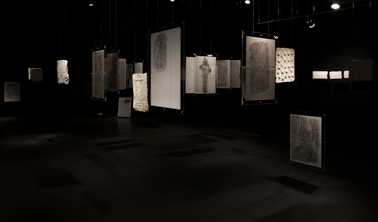
Works from the Dadivank Monastery on display at the Cafesjian Museum of Contemporary Art in 2020
The KASA association is convinced that, beyond static preservation, cultural heritage must be brought to life through active and creative participation, particularly by young people. Monika Sargsyan, its director, describes how to strengthen cultural resilience through cultural heritage. Young people are encouraged to take the initiative and get involved in small-scale projects focused on folktales, legends, and traditions, using innovative techniques that help them develop their skills.
Conclusion and Outlook
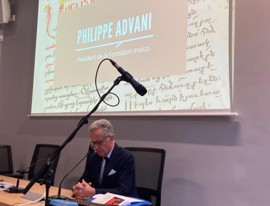
Philippe Advani, president of the INALCO Foundation, highlights the quality of the presentations and the need to continue supporting Armenian heritage, particularly at a time when the culture of Nagorno-Karabakh is at risk of being erased.
This heritage cannot be separated from the history of the Armenian people and the tragedies they have endured over the centuries up to the present day. Most recently, the forced displacement of the people of Artsakh in September 2023 compels us to defend their right to return to their lands and to take steps to safeguard their heritage.
This people has managed both to preserve its identity and to integrate seamlessly into the countries where its diaspora has settled. Great peoples, such as the Armenian people, have something to contribute to the world.
During the symposium, several participants called for a parallel event to be organized in Armenia to build on the momentum generated during the day, with the participation of young people working on the ground.