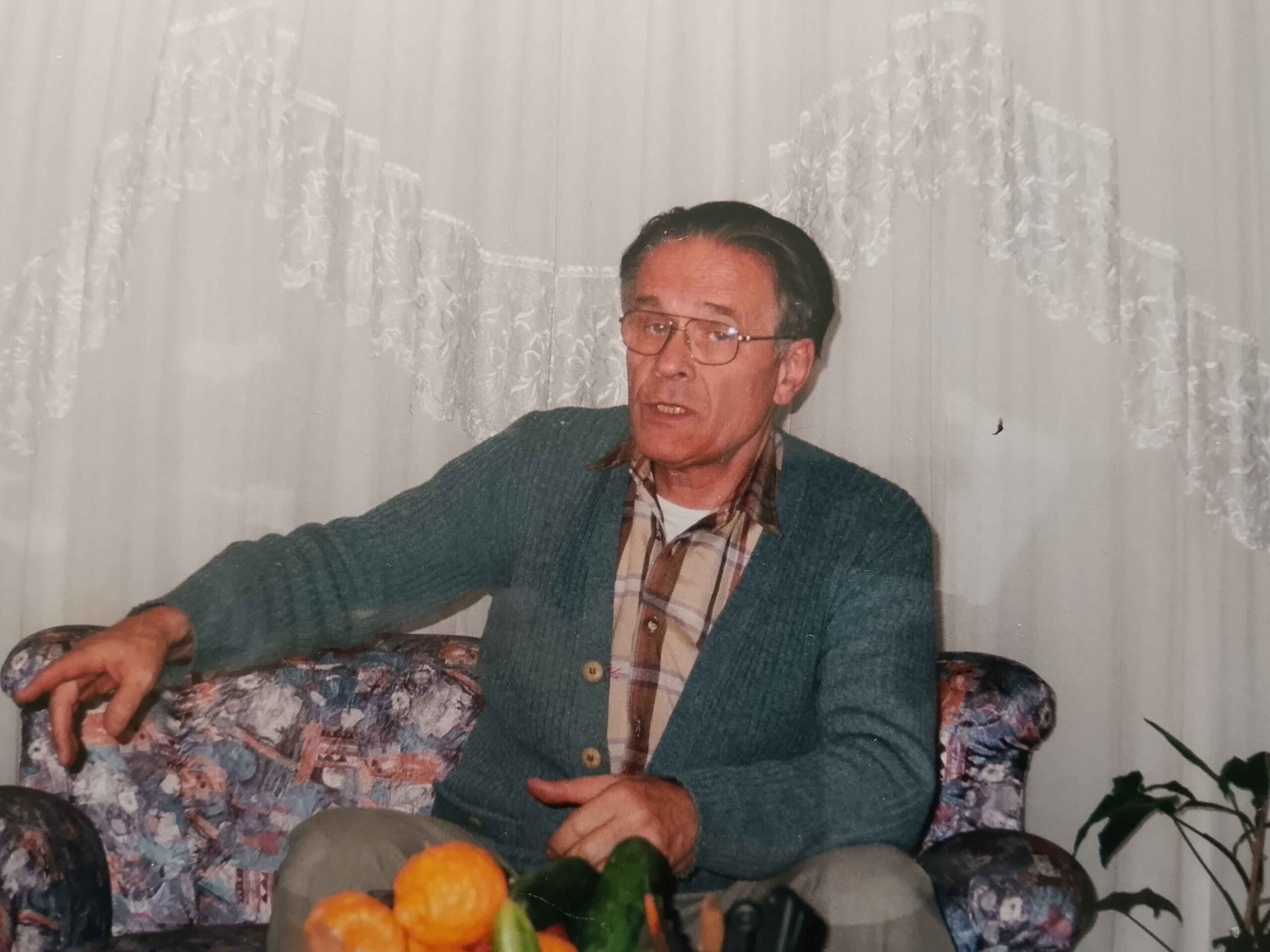
"In churches, the authorities ban Persian, the language spoken and understood by all Iranians."
In light of the popular uprising and the government’s crackdown on the Iranian people since late December 2025, I miss Pierre Humblot. This is a crucial account from the man who was, without a doubt, the only foreign missionary to obtain Iranian citizenship after the 1979 Islamic Revolution, for having provided aid to the wounded during the civil conflict.
A member of the Prado religious order, he had worked as a dockworker at the port of Beirut, Lebanon, before moving to the Iranian capital in 1969 to serve as an assistant to the Chaldean bishop of Tehran.
It was in Tehran—choked with hellish traffic—that I met him in April 1999, when I had come to cover the 20th anniversary ceremony of the Islamic Revolution for my newspaper. An Iranian friend had recommended that I meet him, warning me that “he wasn’t exactly easy to deal with.”
I had started by introducing myself. My personal resume was abruptly cut short by an invitation to “shut up” … “What you’re telling me doesn’t interest me at all. Do you even know the history of Persia, its Church, and its Christians? ” the priest had snapped at me, and then, without missing a beat, he began to tell me about this Persia that was so dear to his heart, and “which, in his opinion, the West knew so little about.”
Pierre’s history lecture was interrupted a few minutes later by the arrival of his friend from France, Yann Richard, the director of the Institute of Iranian Studies at the Sorbonne Nouvelle. He, too, was a great connoisseur of the Persian world and spoke Iranian perfectly. The two men were working on translating Christian texts into Persian.
Teaching Christian Texts in Persian in Complete Secrecy
Pierre then explained to me that in the West, many organizations that support Eastern Christians have a hard time understanding that teaching Christianity in Iran requires a solid knowledge of the language, because one of the major problems in the Islamic Republic is that Persian, the language spoken and understood by all Iranians—especially the younger generation—remains banned in churches by the regime. Only Syriac and Armenian are permitted there, languages that Iranian youth no longer speak or understand.
At the Saint Jean Center in Tehran, which he had directed since 1973, Father Humblot, who taught in Persian—primarily to young Iranians interested in the word of Christ—was, according to the regime’s laws, acting in complete illegality, risking not only imprisonment but also the possibility of being brainwashed in a re-education center. Fearing conversions, the religious police scrupulously enforced compliance with the law. Yet, according to Pierre Humblot, the country had more than 300,000 Muslim converts at the time. Pierre faced the danger head-on.
A large number of converts in Iran
“In Iran, there is a significant wave of converts due to the large number of mystics,” the priest continued. “Young people who are fed up with a certain type of Islam that is imposed on them are looking elsewhere. We must welcome them, educate them, and continue to accompany them on their spiritual journey in Persian. So we organize secret meetings and translate books. We are asked a great many questions about Jesus Christ.”
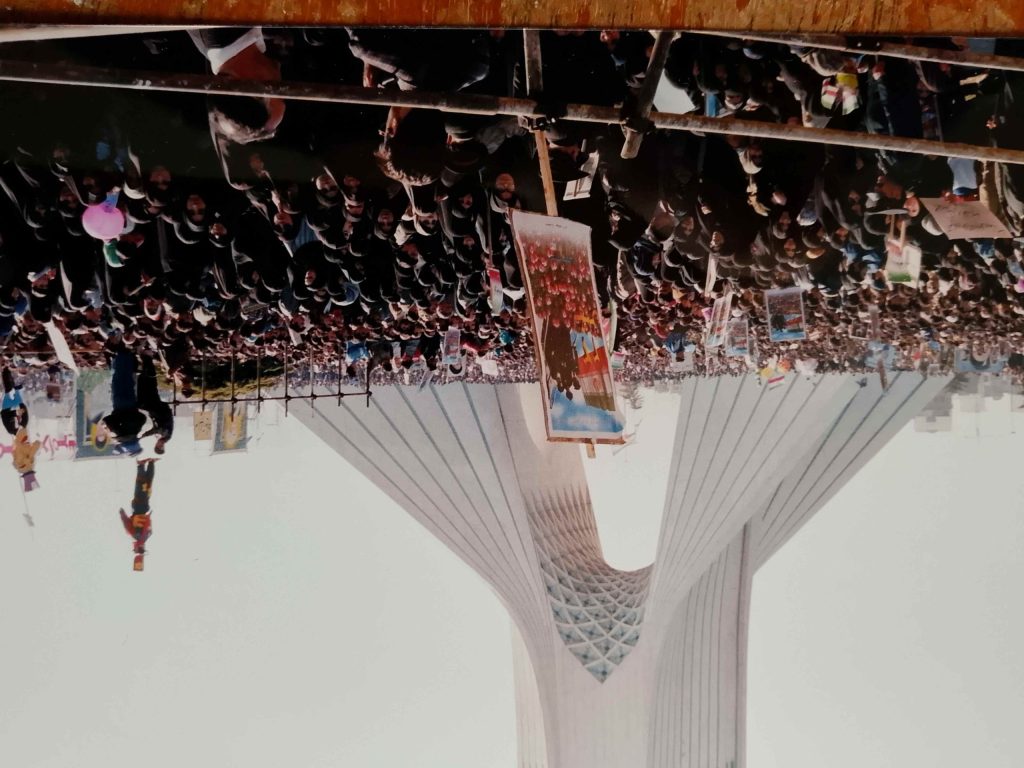
Ceremony in 1999 marking the 20th anniversary of the founding of the Islamic Republic
Pierre would eventually be reported to the religious police. He was expelled from Iran in 2012, but continued his mission among converts living in France. In Paris, he feels nostalgic for Iran: “I lived there for half my life; I eat Iranian food, I speak Iranian, I think like an Iranian,” he confided to me during one of my visits to Paris’s 18th arrondissement, where he was staying.
Father Humblot died in August 2022. I would have loved so much to hear him tell me about Iran and the anger of the protesters marching through the streets of cities today.
Luc Balbont
(*) L’Œuvre d’Orient had recorded an interview with Fr. Humblot on January 22, 2015, upon his return to France.