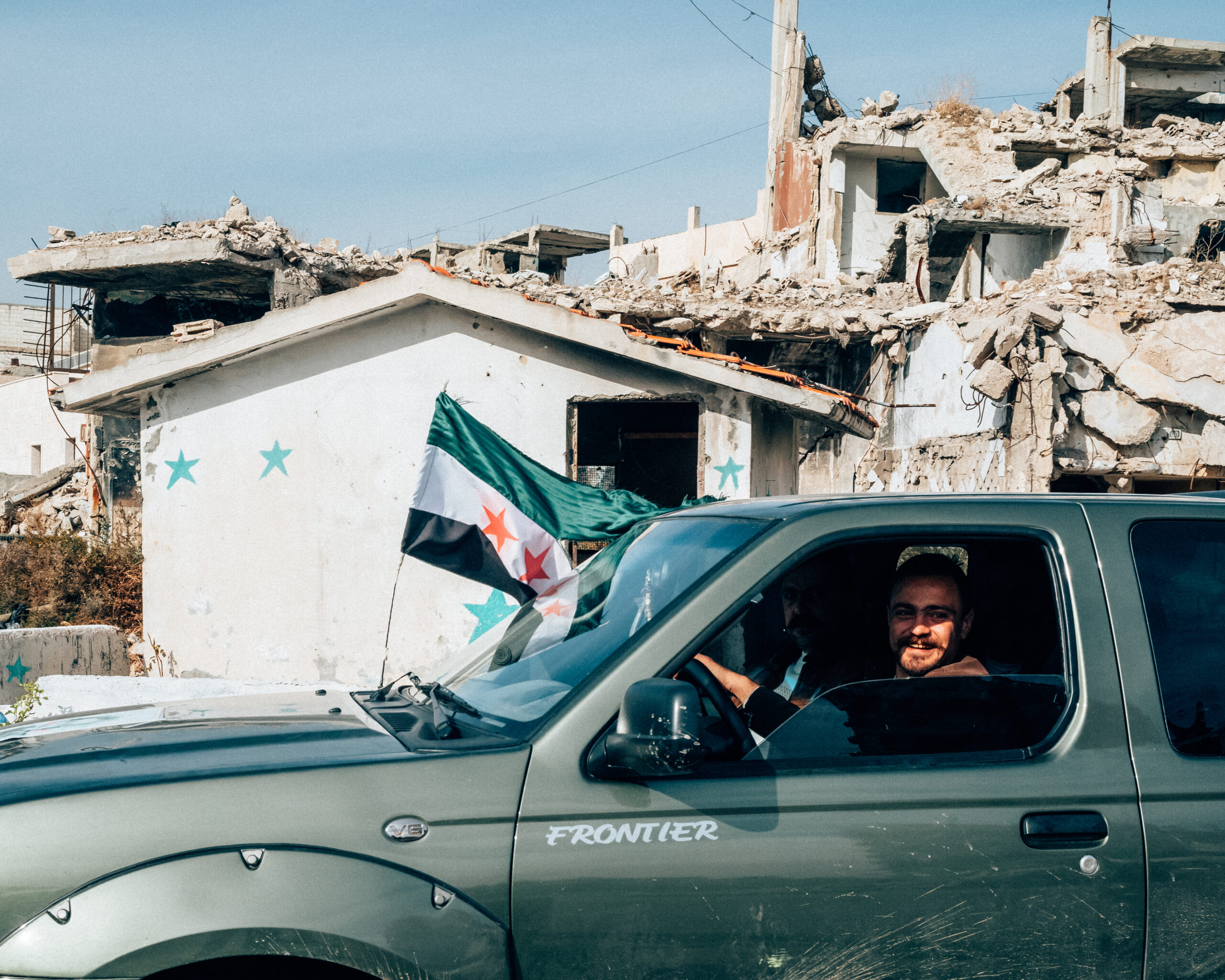
L’Œuvre d’Orient has released a report providing an overview of Syrian society and the Christian community in Syria since the start of the war in 2011 and offers recommendations to the international community.
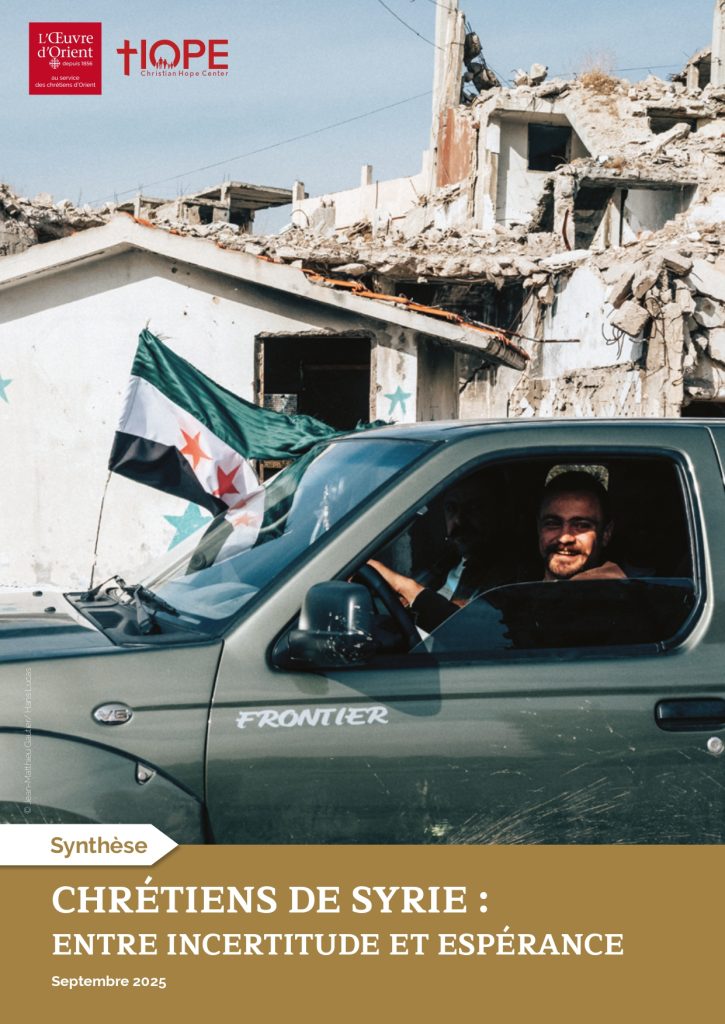
Since 2011, Syria’s Christian community has been facing an unprecedented crisis. More than 80% of its members have left the country; those who remain are experiencing, like the rest of the population, a profound decline in social status, marked by fear and constant insecurity. Yet, despite their precarious situation, Christians continue to serve others tirelessly: through their four major hospitals, their 57 schools scattered throughout the country, and their dynamic nonprofit sector, they help support the population—as exemplified by the Hope Center Syria, which supports youth and helps people reenter the workforce.
Our Recommendations
Religious and ethnic pluralism is one of Syria’s greatest assets. The well-being of all its ethnic and religious communities is a prerequisite for peace and an indicator of the level of civil liberties. The crucial importance of protecting minority rights to ensure stability and prevent conflict has been highlighted in numerous U.N. reports. Nevertheless, after half a century of dictatorship, fourteen years of war, and the post-Assad communal violence, it is clear that this religious and ethnic diversity has been significantly weakened and is under threat in Syria. However, it appears that current aid and protection mechanisms at the European and international levels do not sufficiently take into account the vulnerability and fragility of this ecosystem.
Accordingly, L’Œuvre d’Orient recommends:
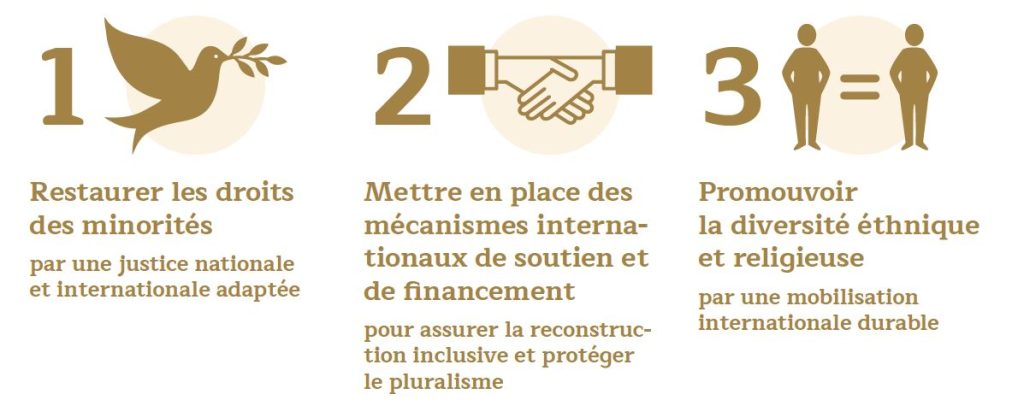
• To swiftly establish mechanisms to support reconciliation and appropriate justice for all Syrians;
• To establish international mechanisms and funding to ensure inclusive reconstruction;
• To mobilize the international community on a sustained basis to promote ethnic and religious diversity in Syria.
=> In particular, we call for the creation of a fund dedicated to ethnic and religious diversity and a national platform for intercommunity dialogue
📄 Learn More
Furthermore, these various national and international instruments could be supported by various United Nations agencies and the European Union. Far from promoting communitarianism, these initiatives would help support a political transition and embed these minorities within the societies in which they live, thereby ensuring the stability of these countries while strengthening respect for human rights for all.
Editorial by Bishop Hugues de Woillemont, Director of L’Œuvre d’Orient
The report summarized here is unique in many respects. It highlights the hardships endured by Syria’s Christian community since the start of the war and the precarious future of this community. This report sheds light on the damage it has suffered, the exodus of its population, and the acts of persecution it has at times faced in recent years. Since the drafting of this report began before the fall of the Assad regime and was completed in late summer 2025, it cautiously incorporates, based on factual events, the new hardships the community is currently facing: communal violence, constitutional and legislative changes, the attack on the Mar Elias Church in Damascus, etc.
The Central Role of Christian Institutions
This report, drawing on public statements, articulates the aspirations of Christian communities for peace, full citizenship, and security as they work to rebuild the Syria of tomorrow. It also highlights the vital role that Christian associations and charitable organizations play for Syrian society as a whole, particularly in the areas of reconciliation, women’s empowerment, and education. Beyond the previously unpublished information and data it provides, this report offers concrete recommendations to international institutions: the establishment of support, protection, and advocacy mechanisms to uphold the country’s ethnic and religious diversity, which is currently under threat. It calls for the protection of these vulnerable groups to be integrated across the board into all cooperation and engagement programs in Syria. It also recommends the establishment of transitional justice mechanisms to foster reconciliation among all segments of the country’s population.
Over the past ten years, L’Œuvre d’Orient has drawn attention to the suffering of the Syrian people and the mass exodus of its Christian population, which has been present in this region for two thousand years. We have long cried out in the wilderness, and our voice has not always been heard. It is high time for the international community to take responsibility and take concrete action on behalf of the ethnic and religious communities in this region of the world, whose very existence is at stake today.
The presence of these communities is a guarantee of pluralism and democracy for our world. They are, as they often like to describe themselves, “the yeast in the dough”: a peaceful future in Syria cannot be built without them.
A press conference to keep the spotlight on the issue
Watch below the press conference held live from Paris and Damascus on Thursday, November 27, 2025, which presents a new report on the situation of Christians in Syria. Bishop de Woillemont emphasizes that it is essential to keep our focus on Syria. For many years, L’Œuvre d’Orient has been supporting Syrian Christian communities by rebuilding churches and homes, providing assistance to schools and hospitals, and implementing programs dedicated to helping young people enter the workforce.