Since February 28, 2026, the Middle East has been undergoing a new phase of military escalation on an unprecedented scale. The rapid spread of the conflicts to several countries in the region, notably Lebanon, has raised fears of a lasting regionalization of the war in an area already weakened by decades of political, economic, and social instability.
In Syria, an Uncertain Transition for Religious Minorities
The fall of Bashar al-Assad’s regime in December 2024 ushered in a period of profound change in Syria. For Eastern Christians, this new chapter brings both hope and concern.
While there are some positive signs coming from the new authorities in Damascus, many questions remain regarding the future of religious pluralism and the place of minorities in Syrian society. The growing influence of Islamist groups, targeted violence, kidnappings, and reprisals against certain communities—particularly Alawites and Druze—are fueling a persistent climate of insecurity.
Lebanon and Syria: Populations Facing a Major Humanitarian Crisis
In Lebanon, as in Syria, the latest outbreaks of violence are exacerbating situations already marked by the collapse of public services, increasing poverty, and institutional fragility.
The humanitarian consequences are significant: forced displacement of families, destruction of essential infrastructure, overcrowding in shelters, an increase in the number of injured people, and worsening hardship for millions of people.
In the face of these challenges, those on the ground are continuing their efforts to address the most urgent needs and preserve the social fabric.
Eastern Christians: Key Players in Solidarity and Stability
Present in the Middle East since the earliest days of Christianity, the Eastern Christian communities are directly affected by the conflicts rocking the region. Despite their vulnerability, they remain key players in promoting solidarity, dialogue, and social cohesion.
Through their churches, schools, hospitals, community centers, and charitable organizations, they continue their mission to serve the entire population, regardless of origin, religion, or social status.
In contexts where public institutions struggle to meet basic needs, their presence provides essential support to local communities and serves as a stabilizing force for local societies.
A conference to understand the issues and shape the future
This conference aims to explore the role of Eastern Christians in promoting peace, dialogue, and brotherhood in Lebanon and Syria, despite the divisions caused by conflict.
Speakers from Lebanon and Syria will share their analysis of current challenges as well as the concrete actions being taken to maintain dialogue between communities, strengthen national cohesion, and promote full citizenship for all.
Through their testimonies and on-the-ground experiences, they will highlight initiatives that help preserve coexistence, support vulnerable populations, and lay the groundwork for lasting peace in the Middle East.
Watch the video of the conference here:
See the summary of this conference below:
Conference: Eastern Christians, Agents of Peace in Times of War
European Parliament, EP SPINELLI Room 3E2, Brussels
Tuesday, May 12, 2026
Speakers: François-Xavier Bellamy (EPP Member of the European Parliament, France), Commissioner for the Mediterranean Dubravka Šuica (via video), Bishop Hanna Jallouf, Bishop Jacques Mourad, Father Youssef Nasr, Myriam Shwayri Tassabehji, Bishop Hugues de Woillemont, Vincent Gelot.
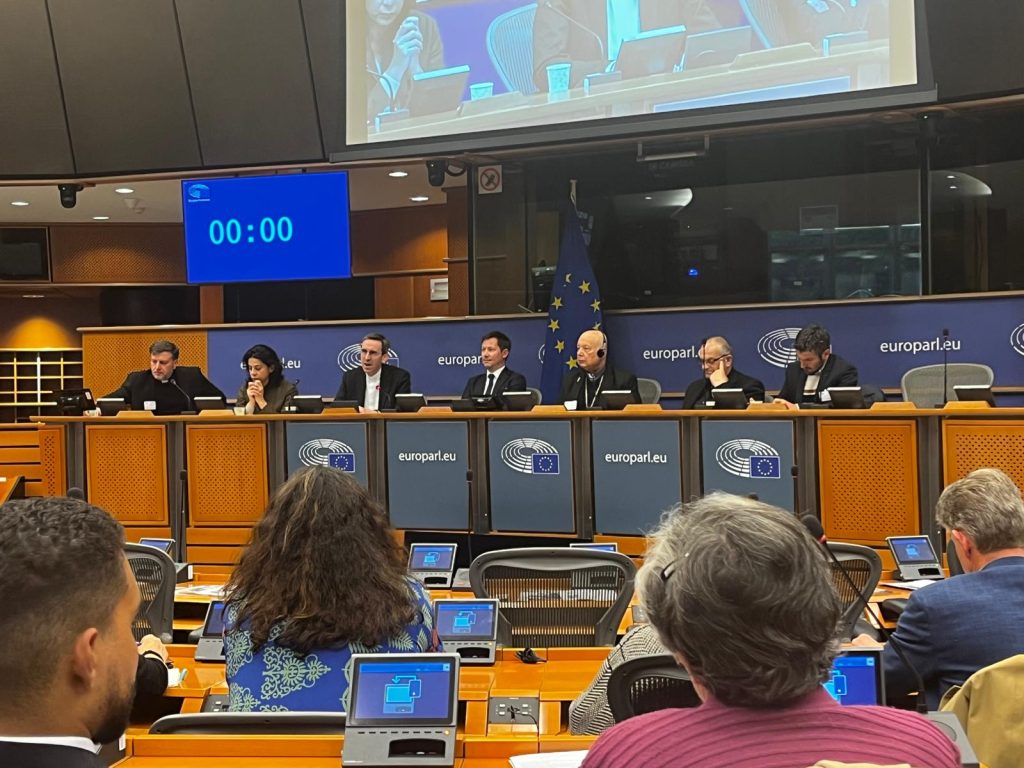
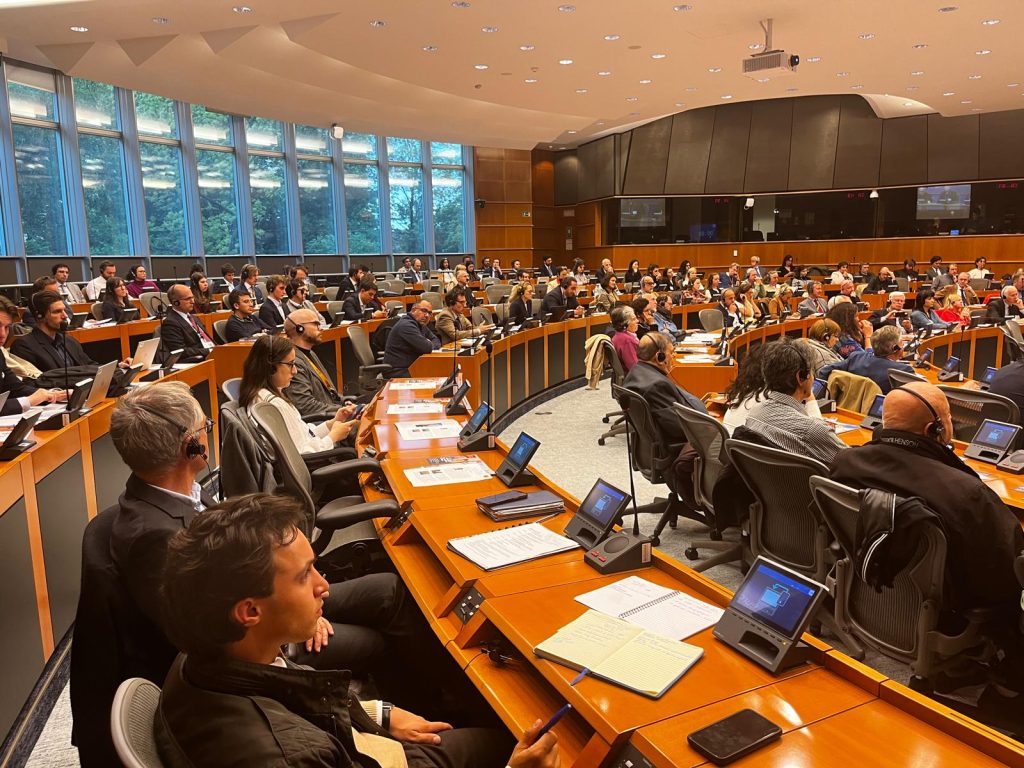
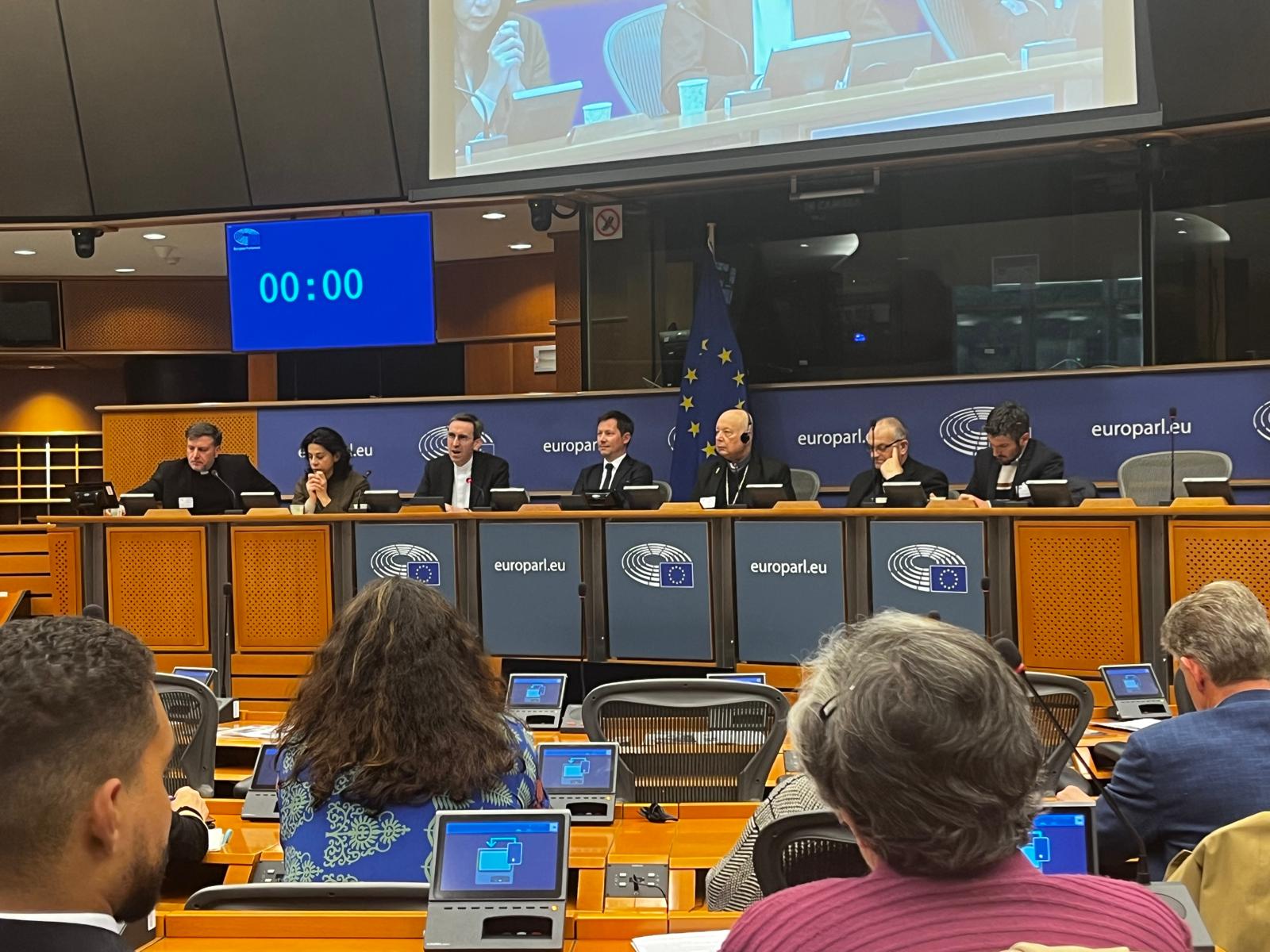
As part of the celebrations marking the 170th anniversary of the Œuvre d’Orient, a conference sponsored by MEP François-Xavier Bellamy was held at the European Parliament in Brussels on Tuesday, May 12, 2026, titled “Eastern Christians, Agents of Peace in Times of War.” The conference brought together several religious leaders and civil society representatives who are working for peace in Syria and Lebanon amid the ongoing conflict in the Middle East.
The conference highlighted the central role of Eastern Christian communities as agents of stability and peace dialogue in a regional context marked by conflict, forced displacement, and humanitarian crises.
- At the opening, Member of the European Parliament François-Xavier Bellamy praised the work of the Œuvre d’Orient. He noted that the relationship between the organization and European institutions provides European decision-makers with “valuable insight” into the realities of life in the Holy Land and the Middle East. In his view, Eastern Christians remain indispensable actors for stability, identity, and peace in the region.
- Mgr. de Woillemont, Director of Œuvre d’Orient, then outlined the scope of their work in 23 countries, through more than 1,200 projects in the fields of education, health, and cultural heritage; supported by more than 70,000 donors and several public and private partners who work with local communities, without discrimination based on origin or beliefs.
- In a video address, Mediterranean Commissioner Dubravka Šuica thanked the EPP and Œuvre d’Orient for their commitment to populations affected by conflict. She condemned the violations of Christian values and fundamental freedoms observed in the region. She highlighted the goals of the Pact for the Mediterranean and the need to protect civilians affected by conflicts.
The testimonies from Syria and Lebanon were a highlight of the conference:
- Bishop Hanna Jallouf (Latin Bishop of Aleppo) described the difficulties faced by Christian schools in Syria following years of war and political upheaval. Despite the closure of some schools and the elimination of subjects deemed essential to personal development, he affirmed the commitment of Christian communities to continue offering an education open to all, regardless of religious affiliation.
- For his part, Archbishop Jacques Mourad (Syriac Catholic Archbishop of Homs) issued a strong appeal in light of the humanitarian situation in Syria. He spoke of violence, forced displacement, and the loss of trust between the people and the authorities. He emphasized that he was speaking on behalf of all Syrians, not just Christians, but warned of the mass exodus of Christian communities.
- Lebanon also took center stage in the discussions. Father Youssef Nasr (Secretary General of Catholic Schools in Lebanon) detailed the consequences of the war and the economic crisis. The bombing of schools in southern Lebanon, massive population displacements, the increasing precariousness of families’ situations, and a growing inability to fund schools are challenges that Christian institutions are striving to address. He noted that more than 30% of students in Lebanese Catholic schools are not Christian, illustrating the fundamental role these institutions play in national cohesion.
- Myriam Shwayri, Secretary General of the Al Kafaàt Foundation, emphasized the role of Christian organizations in supporting people with disabilities, at a time when the Lebanese government is struggling to fulfill its essential social and health care responsibilities. She acknowledged the support provided by the Œuvre d’Orient to Al Kafaàt’s efforts in providing care, therapies, and training.
- Finally, Vincent Gelot, Director of L’Œuvre d’Orient Lebanon-Syria, noted that NGOs, local churches, and associations are now carrying out the missions that the Lebanese government is no longer able to fulfill. He emphasized the importance of European support—not only financial but also political and symbolic—for these actors on the ground who work daily to foster conditions for dialogue, reconstruction, and peace.
He reiterated the key messages from L’OEuvre d’Orient’s advocacy reports:
– The Lebanese Government’s Unpaid Debts: A Public Service Mission in Jeopardy: Lebanon
Report – Christians in Syria: Between Uncertainty and Hope: Syria Report
o In particular, he called on the European Union to allocate specific funding for religious minorities, local partners, and schools to support reconstruction and reconciliation.
o He regrets that the “Pact for the Mediterranean” does not make religious freedom and women’s rights a prerequisite. And he reiterates his call for the European Union not to overlook these actors on the ground.
Beyond these alarming findings, this conference above all highlighted the ability of Eastern Christians and the organizations supporting them to act in the service of local communities. The discussions served as a reminder that the defense of religious freedom, pluralism, and human dignity remains a central issue for the region’s future.