
Chadi was 20 years old, Georges was approaching 30, and Elie was nearing 40. The three friends were working on a roof, busy repairing the internet network in Ain Ebel, a Christian village. They were killed on March 12 by an Israeli airstrike. Yet none of them posed a threat to the State of Israel. The tragedy has plunged this village of 1,100 residents into mourning. And while many in the region are increasingly fleeing from the south to the north of the country, Hind and Maroun Khreish have chosen to stay.
What is life like today in Ain Ebel, located 5 kilometers from the Israeli border? Hind Khreish describes her daily life, where people, despite the threats, are determined to preserve their history. In the video of the funeral for the three workers that Hind sent me, the people of Ain Ebel pay a heartfelt tribute to the victims. These images take Hind back to that painful day in October 2024, which left a lasting mark on her. “ “The Israeli army gave us half an hour to leave Ain Ebel,” Hind recalls. “We left with nothing and took refuge at my son’s home in Beirut. Our exile lasted 66 days. And then we came back, because this is where we’ve built our lives.”
Maroun, 74, and Hind Khreish, 62, have lived their entire lives in Ain Ebel, located in the Benti Jbeil Caza, 5 km from the Israeli border. The region comprises 36 villages, 4 of which are home to both Christians and Shiite Muslims, and 4 that are exclusively Christian, such as Ain Ebel.

“Maroun, my husband, is now retired. He has cancer,” his wife confides. “Because of the war, we can no longer go to Beirut. We’re stranded. Maroun can’t get the care he needs. There is no safe route to Beirut for medical emergencies, nor, for that matter, for transporting food and fuel. The people are surviving, abandoned. No one cares about us.”
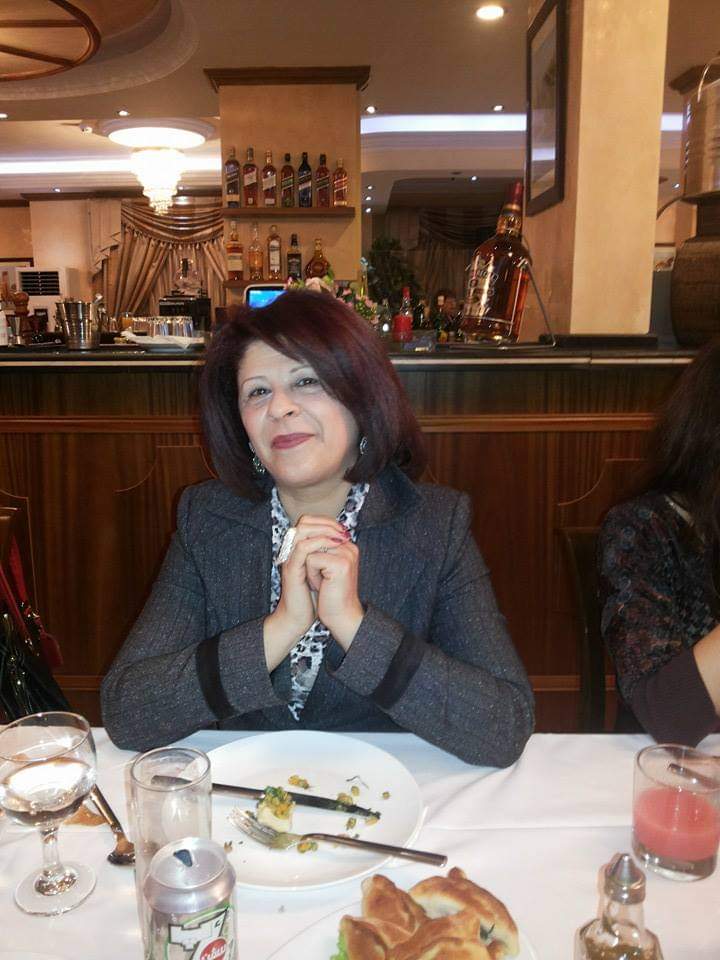
Maroun didn’t want to show his face, ravaged by illness. And Hind preferred to send me a photo taken before the 2023 war, in a restaurant, on a day of celebration and joy. Today she lives confined to her home, unable to go out for fear of missiles or reprisals. The stores are empty. The streets are deserted. There are no shouts of children on their way to school. The only sounds are those of missiles falling nearby. “Leave, abandon our home? Never!” exclaims Hind. “We’re living off our reserves; we’re getting by as best we can. I have two children: a daughter, Rita, who’s 39, and a son, Nasrat-Victor, who’s 30.” Because of the war, they’ve been living in Beirut since October 2023. They can’t return to Ain Ebel. The capital is 130 kilometers from our village. Our family ties have been severed, but setting out on the road means certain danger…”
It was in this village that the couple watched their two children grow up. “We are not pawns, nor are we numbers that every political faction can manipulate as it pleases. We want to safeguard our land, protect our history, and preserve our identity. This war is not ours, but that of foreign nations fighting for their own interests without regard for innocent victims. Here, the people hope to rediscover the spirit of peace and living together. ” Hind would love to welcome back those children she hasn’t seen in so long. “We want to have our village back the way it was. Peace is our only desire.”
Luc Balbont