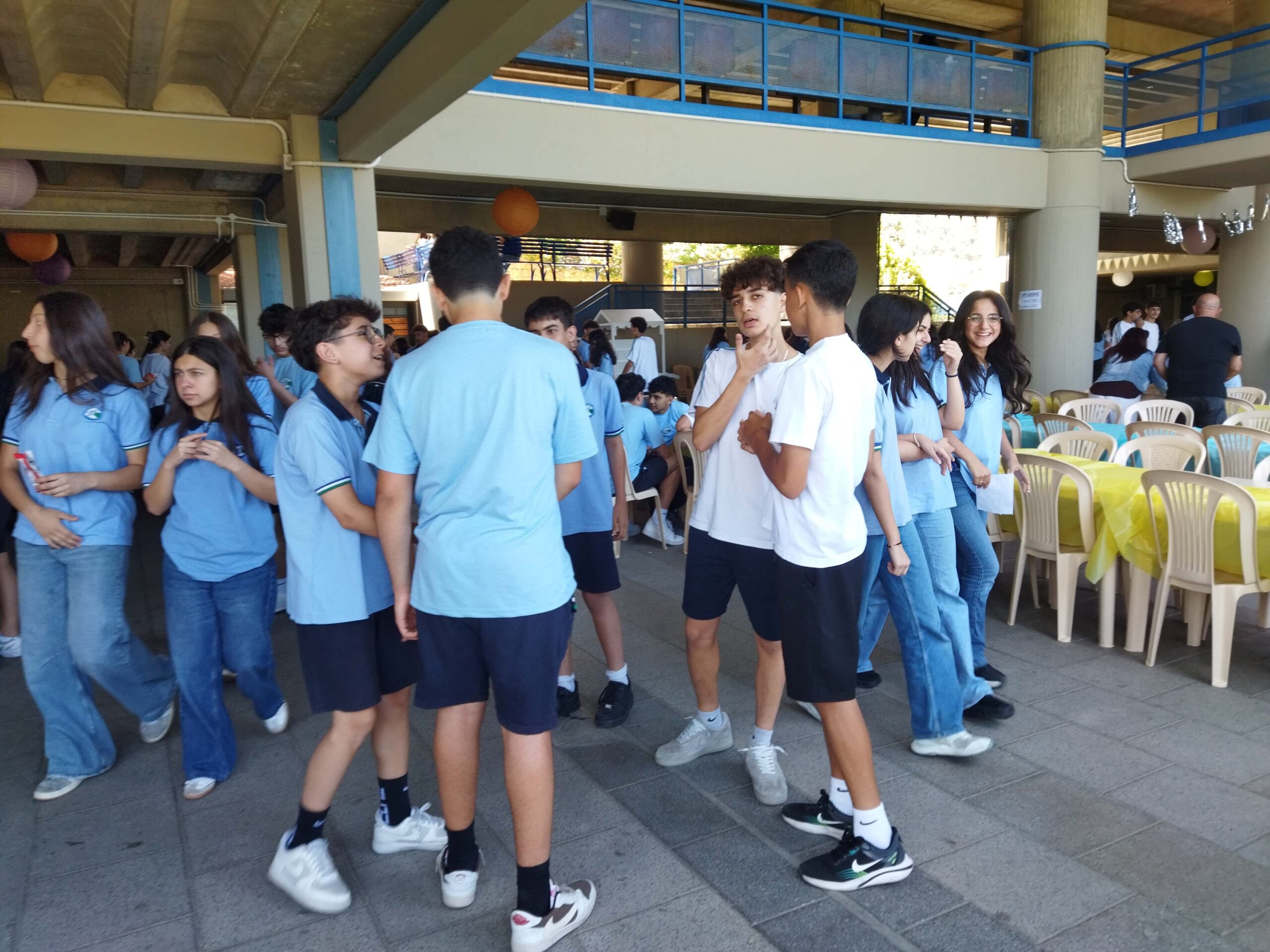
Learning to Read to Understand the World
In a Middle East that has been plagued by wars and conflicts throughout its history, the Œuvre d’Orient has continued to support educational projects and fund schools for 170 years.
By Luc Balbont.
Also worth reading in the Œuvre d’Orient newsletter, No. 823, is the article that traces the 170-year history of the Œuvre d’Orient.
Founded on April 4, 1856, in Paris, the Œuvre d’Orient has just celebrated its 170th anniversary. Its very first meeting brought together 75 people in Paris. These Christian intellectuals, now largely forgotten, were already aware that ensuring peace and harmonious coexistence in the East depended on schools and knowledge.
Over the course of 170 years, the Œuvre d’Orient has weathered two world wars in 1914 and 1940, fifteen years of civil war in Lebanon between 1975 and 1990, regime changes, massacres, dictatorships, and foreign occupations. Yet, despite this multitude of catastrophes, the organization continues today to support hundreds of educational projects each year. In Lebanon, Turkey, Palestine, Iraq, Jordan, and Egypt, as well as in India, Armenia, Ukraine, Romania, and certain African countries… It is present in 23 countries where Christian communities live. In these regions, where so many generous initiatives have been shattered forever by tragic events, the Work has never ceased to embody the hope of accessible education—a promise of a possible and sustainable future for a large number of children, often from modest families.
Schools for Girls: A Vision That Was Ahead of Its Time
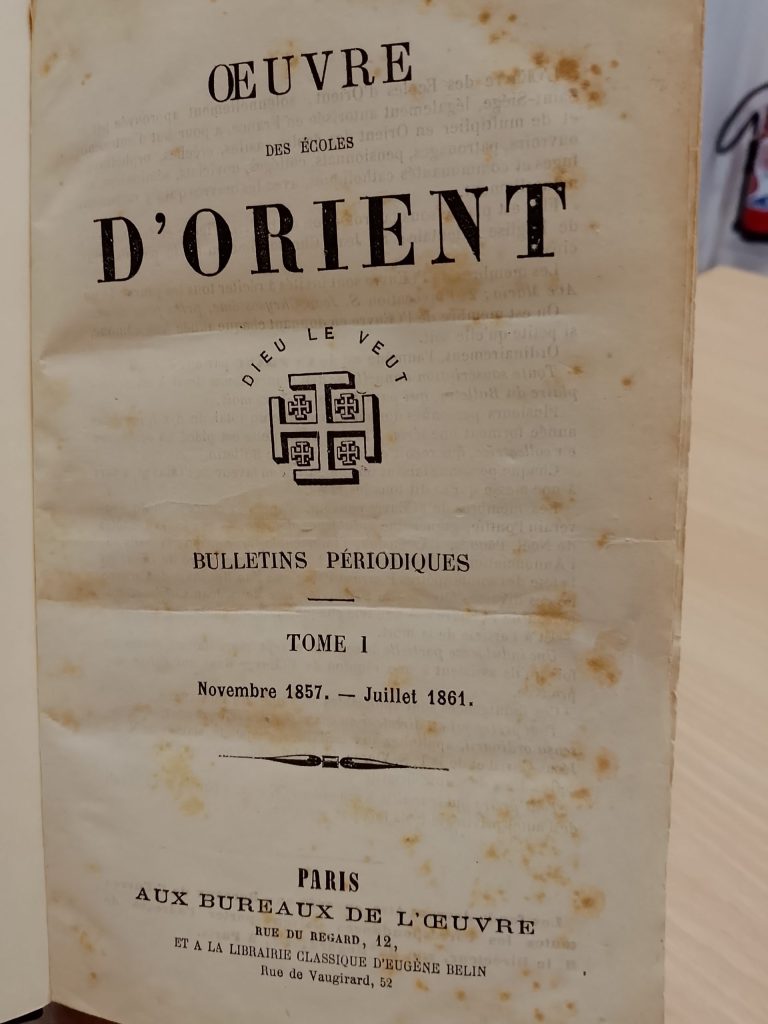
The mission was clearly defined in the very first newsletter, published in November 1857.
Building on the work of the Lazarists and the Congregation of the Daughters of Charity in the Levant, who had already opened schools in various cities of the Ottoman Empire, the primary objective of “L’œuvre des écoles d’Orient” was to support these Christian institutions by providing them with material aid as well as moral support, with a particular emphasis on the education of young girls. “It seemed to me,” wrote Louis-René Etienne, “that to be effective in supporting the schools, we had to focus on the rising generation, among other things by opening schools for girls. In my view, this meant introducing a major innovation into the customs of the people of the East and changing their ways of thinking for the benefit of civilization.” It was a prophetic vision, at a time when feminism did not yet occupy the space in the media that it does today.
“The other fundamental aim of this new institution was to dismantle the fanatical views of certain extremist Muslim groups and to ‘put an end to all religious persecution,’” writes Mr. Etienne. This was a visionary concept on the part of the founders, in which children of different faiths received a shared education, sitting side by side in the same classroom—a peaceful way to instill a sense of citizenship in young people from the Middle East in countries where communalism takes precedence.
The testimony given in 2017 by Mahmoud Chibargi, a Lebanese dentist from Tripoli, illustrates this sentiment well. Every year at Christmas, this Sunni Muslim visits the principal and his former teachers to thank them: “This Christian school led me to medical school. I can’t forget that. In fact, I’ve enrolled my children in the same Saint Elie Middle School.” (Balbont blog, December 12, 2014).
Teaching French: A Key Asset for France's Global Influence
French-language instruction in these schools has been a key asset in promoting French diplomacy, and it has been supported even during periods most hostile to the Church, as Charles Personnaz, director of the National Institute of Heritage and president of the Advisory Council for Schools in the East, points out; an organization that, in partnership with the government, promotes the teaching of French. Even as the English language gains ground and schools open programs in the language of Shakespeare, the French-speaking world remains an asset. “Because French is a language of culture and not merely a utilitarian tool,” asserts Mr. Personnaz, “a language that sharpens critical thinking and also carries social responsibilities, such as welcoming everyone, especially the most vulnerable.”
The Work Today.
In the Middle East alone, an average of 271 schools per year receive funding from this “Fund for Schools in the East,” created in 2020 with the support of the Œuvre d’Orient. “We award a grant of 10,000 euros to each school per school year. The amount may vary and increase depending on the schools’ needs,” says an official.
There are also solidarity initiatives in which well-off families cover part of the tuition costs for students in financial need.
To address the challenges facing Catholic schools—which have been exacerbated by conflict, the COVID-19 pandemic, and a disastrous economic situation—the organization has also resumed its school sponsorship program; today, approximately 1,000 children from low-income families of all faiths benefit from it.
In remote villages, L’Œuvre d’Orient works to keep these small schools running. In addition, schools that serve children with disabilities—including those with physical disabilities, hearing impairments, and visual impairments—receive special attention.
With the endless wars ravaging the region, causing thousands of deaths and displacing many people, many schools have had to close temporarily or permanently. Nevertheless, the organization continues to fulfill its original mission by expanding distance learning.
A Constant Commitment to Education
Since 2014, the leadership of the Œuvre d’Orient has been organizing an international symposium on a specific theme that brings together education leaders and practitioners. The most recent conference, titled “Teaching in Adversity,” took place in Egypt in 2025. These exchanges facilitate the sharing of educational initiatives across borders. An academic journal, “Perspectives & Reflections,” also addresses a different theme each year.
The Institute for Eastern Christians, founded in 2020, also provides valuable university-level instruction on the history and realities of Eastern Christians to approximately 150 students each year.
Schools That Symbolize a Possible Future
At headquarters, in the director’s office, the organization’s newsletters are carefully stored in hardcover binders. A real treasure.
In one of his most recent editorials, Bishop Hugues de Woillemont, director of the Œuvre d’Orient, notes that: “These Catholic schools educate young people to live together harmoniously and instill a culture of dialogue. ” A legacy spanning 170 years, synonymous with a bright future for many children in the Eastern world.
Luc Balbont